Subculture of Violence

The Subculture of Violence is a criminological term normally reserved to explain crimes committed in poor, urban communities but today’s on air killing of WDBJ Reporter Allison Parker and Cameraman Adam Ward show us that these behaviors have not been confined within neatly drawn boundaries around disadvantaged neighborhoods.  This violence has oozed out of areas where it normally occurs and is now everywhere.  Rudeness, dismissiveness, and a sense of entitlement lead to poor and sometimes heated interactions which are precursors to violence.

We as a community have got to do better.  And, we have to treat each other better. It is no secret that those involved in these violent incidents are trouble souls.  They feel invisible because society does not care about them.  Or at least that is the perception.  They have been cast aside by family, friends, neighbors, and co-workers.  This does not excuse this behavior.  Violence is NEVER the answer! What it means is that we need to wake up.  We have a responsibility.  If something is out of the ordinary, say something.  If something does not seem right, do something.  Ignorance is not acceptable.  We can no longer be complacent spectators going through the motions of life.  We all play a vital role in this script. Now is the time to start caring.  Wave at a neighbor.  Smile at someone coming down the street.  Help an elderly person across the road.  Stop at stop signs and let pedestrians cross safely before you gun the engine to move quickly through the intersection.  Ask someone how they are doing and have the compassion to wait for the answer to ensure they are truly okay.  Slow down.  The world does not revolve around you or me.  The only way we are going to survive is if we go back to basics and start treating people kindly, gently, and humanely.  Hatred has crept into places that used to be off limits: our schools, playgrounds, churches, and workplaces.  We need balance.  We live in this world together and thus must be accountable to one another.  Recognize the warning signs and act on them.

Hurting people hurt, and in this case kill.  Let’s do better.

Be safe,

L.J.
Follow me on Twitter: @CrimeDoc1213

#subculture #violence #killing #crime #RoanokeVA #RIP #WDBJ #allisonparker #adamward #prayer #community #neighborhood #togetherness #kindness #responsibility #accountability #justice #peace

I’m in Love with a Black Man

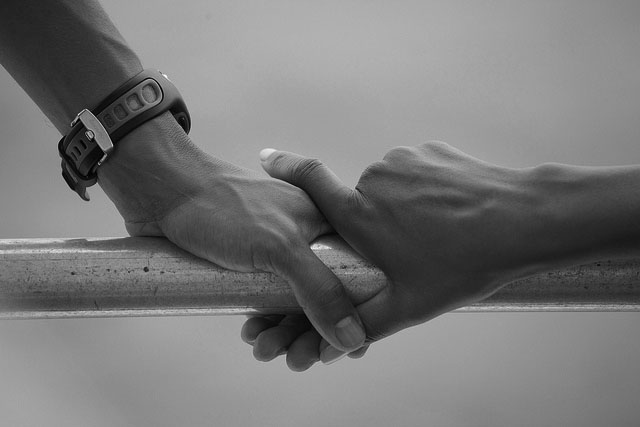
Hands United

I’m in love with a black man and he loves me.  What affects him, affects me and what affects me, affects him.  So here I am at the annual American Society of Criminology (ASC) meeting presenting the findings of my study on racial profiling in America.  Why is there this constant debate over what it is?  How do you define it?  Quantitatively?  Qualitatively?  Both?  What data is the standard?  The police don’t want to collect race statistics because they don’t want to be called racists. And the community complains to news reporters and their stories are called ‘anecdotes.’  So how do you tame this beast?

I stand in front of the brightest minds in my field, the country’s top scholars waiting to hear what I found.  So with a big breath, I start…

How can scores of black people be wrong?  Why are they discounted so?  If the tables were reversed and black cops were stopping white citizens, surely there would be no debate.  Listen to me carefully.  I documented the lives and stories of 20 black men living in Washington, DC for six months.  They kept a journal of the times they had been stopped and the average was five times a week.  Let me say that again, the average was five times a week.  Some will say that I have limitations in my research and that my case study was not scientific enough.  Do I know they weren’t speeding?  I guess not.  Were they transporting drugs?  I hope not. Drugs were never found in any of the so-called ‘consent searches.’

My conclusion is that the black man is under siege.  He followed doctor’s orders and got a good education from a good school, got a good job, and bought a nice house in the ‘right’ neighborhood.  He doesn’t beat his wife, is a good father to his children, but to no avail.  He is still oppressed, disrespected, and harassed.  I guess someone forgot to tell him: You’re still black.

Be safe,

L.J.
Follow me on Twitter: @CrimeDoc1213@gmail.com

#love #black #man #race #police #racialprofiling #RaceinAmerica #racematters #dialogue #discourse #truth #respect #change #ASC #criminology #crime #justice #deardiary #ljsamuel

Image source: http://www.handsunited.org

Dear Diary

Dear Diary

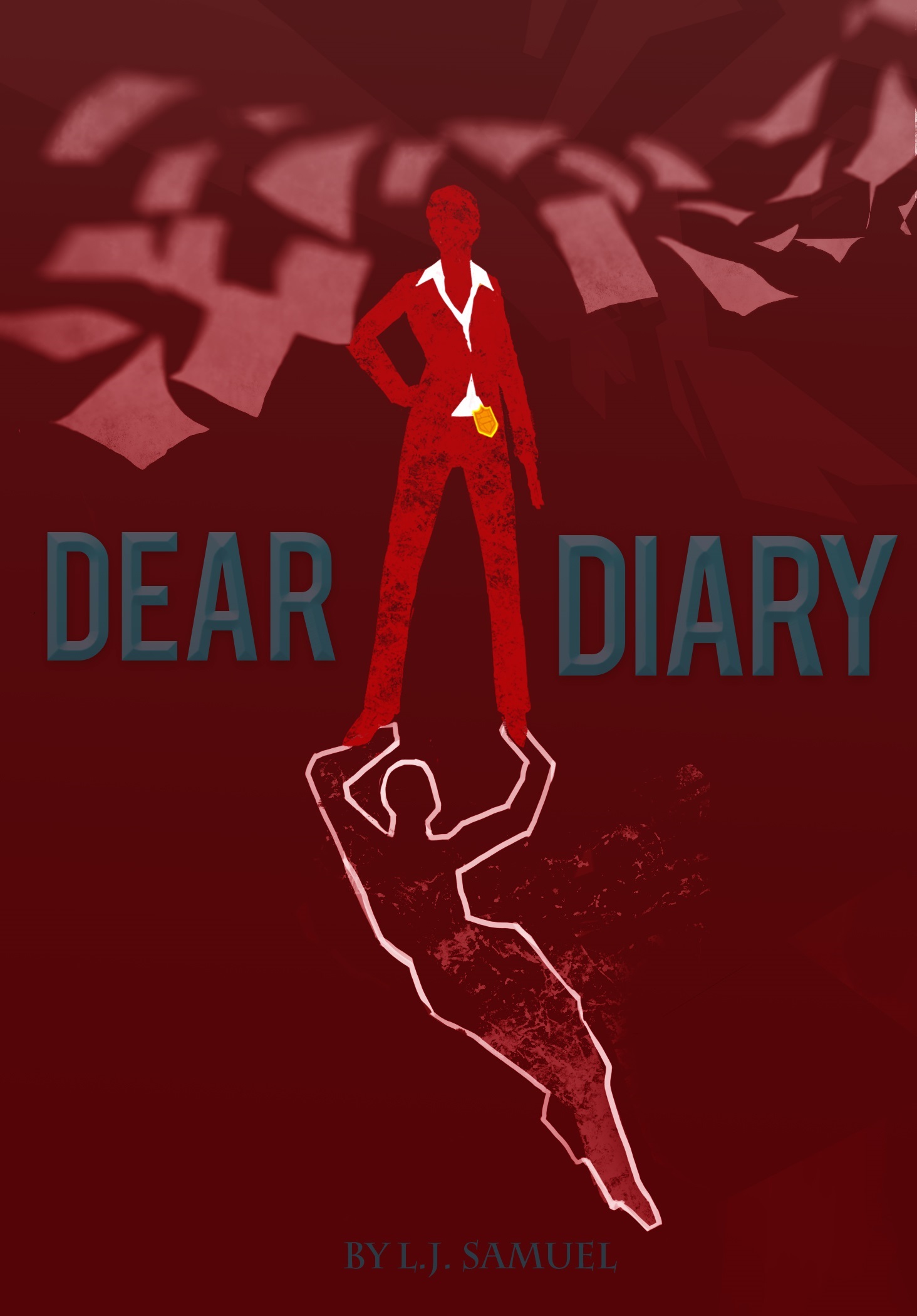
Today I’m sharing a chapter from my crime novel, Dear Diary.  It is a murder mystery set in the Nation’s Capitol and highlights the length one will go for lust, greed, and jealousy.  Enjoy!

CHAPTER ONE

The Murder Case

     My name is Samantha Harris. I am 30 years old and I head up the Homicide Branch, a premier homicide squad with the DC Police Department. I am tough, tenacious, smart, and I am good at what I do. I have been assigned to Homicide for just over a year, but have proven useful to my superiors as I have “the gift.”  When it comes to solving homicides, I am able to see the full picture and drill down to minute details -details often missed by others- that help me solve some of the most difficult murder cases. I am easy on the eyes, as they say, well educated, and well-spoken so I am often thrust in front of the camera to give statements on behalf of the department. I get along with families of murder victims no matter how rich or poor and I am able to put together the puzzle pieces that lead me to the murder suspect. It’s rare that I don’t get my man.

I just arrived on the scene of a brutal murder in Crestwood, a small area within the 16th Street Heights neighborhood of Washington, D.C.  Crestwood is one of the few neighborhoods that make up the Gold Coast, an affluent area in the northwest section of the city known for its educated, connected, and well-off residents. Massive million dollar homes, perfect lawns, expensive cars, and toy dogs are a permanent part of the neighborhood landscape. The latest census figures show that nearly 40% of Crestwood residents possess a law degree, medical degree, doctorate, or Master’s degree with the neighborhood ranking among the top 15% of the wealthiest residents in the entire country. As such judges, top hospital officials, and university presidents call this home.

It is an early evening in September. It has been unseasonably warm so people are milling around and neighbors are hanging out trying to get a look at what is going on. Range Rovers, Porches, and Benzes occupy residence in every other driveway. Au pairs push strollers up and down the street while personal drivers patiently wait in black Lincoln Town Cars waiting for their next assignment. Every now and then, a soccer mom drives up and hops out of a Volvo SUV sporting Lululemon yoga pants, Gucci sunglasses, and diamonds so large you could see them from down the street. I side step and maneuver around the privileged Crestwood residents who fire questions at the officers guarding the perimeter of the crime scene demanding to know what is going on.

The victim is a 30-year-old female lawyer, a rising star at a swanky downtown corporate law firm. Megan Smith. She was a tall, beautiful woman with fiery red hair and an athletic body. She played varsity volleyball at Stanford University, where she attended for both undergrad and law school. But, unfortunately, none of that matters because Megan is dead.

“What do we have, Jay?” I say to my sergeant as I slip on a pair of blue latex gloves. Sergeant James Thomas, affectionately known as “Jay,” is a big, burly, black teddy bear who can crack a skull or coo at a baby. I bend down to put shoe covers on over my boots and slowly survey the room. It is what you would expect in a neighborhood like this. Brazilian cherry hardwood floors gleam under antique furniture and strategically placed oriental rugs. Someone had great taste. Expensive paintings line the walls in the hallway. I am no art expert but there was a Norman Rockwell painting on the wall near the front door that I was certain was authentic.

“What’s that sound?” I ask Jay, my attention on the kitchen in the back.

“Water,” Jay says.

I walk slowly into the gourmet kitchen where the body was found. I take in every detail from the scuffs on the floor, to the smell of men’s cologne, to the faint sound of a television in the background.

“Looks like she was washing some vegetables for dinner when she was interrupted,” I surmise, as I look up and down the kitchen countertop.

I step over pieces of glass.

“Glen?” My forensics guy pokes his head around the corner.

“Did you get pictures of this?”

“Yes ma’am,” he says, “but I left everything in place without moving items just the way you like it.”

“Good,” I say and I look up at the ceiling trying to digest what happened here, my mind racing.

“Where’s the husband? I thought someone said she was married.”

“She is, Doc, but we haven’t gotten a hold of him yet,” answers Jay.

     Hmmm. When I reach the body, I see Megan Smith, Esq. lying in a pool of her own dry blood. I reflect on the irony of this type of violent death hitting the likes of this neighborhood as the sound of my booties shuffle across the pristine marble floors.  Residents from this neighborhood believed they were immune from the crime and violence that touched other parts of the city, but clearly, this was not the case.

I examine the body. The bruises on her face are blistering, signifying that she has been dead a few hours. Rigor mortis has begun to set in. I lift her arms and move the fingers on her hands to look for evidence of skin, fibers, or anything else that may add a piece to her puzzling murder. Her hair, which looked to have been pinned up in a neat bun, is pulled out of its clip. Tears have dried on her now lifeless face. She lies awkwardly on the kitchen floor, her right knee bent underneath her – the position she fell in as her attacker punched, hit, and pushed her around in his rage. Yes, his. I am almost certain she died at the hands of a man. There is so much trauma to her face. Someone was very angry.

I move away from her body as something catches my attention. Papers and files lie in a heap on the floor over near the massive kitchen table. They’re covered in a red stain that looks like wine. Odd.

“Jay?” I look up at him. “Exactly what did our victim do?”

“She was a lawyer,” he says, glancing at his notebook. “Corporate law. Commercial real estate deals, represented big corporations, that sort of stuff.”

“Okay, find out what cases she was working on. Maybe she had an enemy.”

“Doc?” I turn at the sound of Detective Gregory’s voice.

Trailing behind him is a middle-aged female officer in uniform. “This is Officer Loftus,” Gregory says, pointing a thumb at the officer. “She was the first officer on the scene and did a good job cordoning off the area and keeping the other uniforms out before we got here.”

“Officer Loftus,” I nod at her and she returns my greeting with a stiff nod of her own.

“Ma’am, I am very familiar with this house,” she begins without prompting. “I have been working this beat for 13 years and in the last four years, I have been called to this address at least a dozen times. The victim was a pretty sharp woman. She was really professional and about her business.”

“What about the husband?” I ask standing up so I could speak to her on eye level.

“Her husband was a piece of work. He was older than her by at least…15 years. I don’t know, ma’am, but he had some hold on her. He’s some real estate bigwig. Travels a lot but drinks more. He was always hitting her. Intimidating her.” I nod at her letting her know that she could continue.

“Now, I know she was real athletic herself, but this guy was a beast,” she states emphatically. “I know she was embarrassed and never wanted to press charges but it just wasn’t right!”

I take in what Loftus just shared and tell her, “I’m going to have one of my detectives sit with you to get copies of your notes and we need to track down the incident reports.”

“Whatever you need,” she says.  I can see the quiet sadness in her eyes as she turns to leave; I know the look well. She’s thinking that maybe she failed the victim somehow. If we could work every block and be in every house at all times, there would be no crime. But, we can’t. That is the thankless job of the police.

I sigh and get back to what I’m doing. “Ok, Jay, let’s walk through this.” Like any other crime scene, we try to re-create what may have happened to get a better idea of the details, a possible suspect, the motive, and a resolution.

I turn on the voice recorder on my department-issued iPhone, and slowly and methodically walk through the crime scene starting at the front door.  “After a long day of work, Megan comes home. She kicks off her shoes.” I point to her heels neatly lined up by the door. “She lays her keys on the table and throws her coat over the chair.” I point to a side table and Queen Anne chair in the sitting room adjoining the kitchen.

“With dinner on her mind, she moves into the kitchen, but not before she takes some paperwork out of her leather portfolio. She takes a bottle of wine out of the dining room banquet, along with a wine glass and pours some into it.” I turn back to the kitchen. “She moves into the kitchen, takes some ingredients out of the fridge, and turns on the water in the sink when she is surprised by her attacker. They argue? She turns her back and that’s when he strikes her the first time. She stumbles but doesn’t go down. She turns to get away and he grabs her hair pulling it out of the bun clipped on her head. She struggles to get away but he is too strong. He strikes her across the face. Her stomach must have been in knots, fear overtaking her.” My stomach drops, a lead weight pushing at my kidneys. “Hands grip her throat, squeezing the life out of her and she is down. Before the killer leaves, he rifles through the papers Megan left on the table looking for something. He does not find what he is looking for and crumbles the papers tearing some in the process. He spills red wine over the papers and knocks the wine glass to the floor shattering it. There are no signs of forced entry. Everything is pretty neat except for the kitchen area, so it has to be someone she knew, someone with a key. The husband….”

Jay clears his throat when my voice trails off.  I look in his direction. I have butterflies in my stomach. I blink my eyes quickly and refocus. These homicide cases were routine to me but for some reason this case was really bothering me.

“Um, I think that’s all we’re going to get right now,” I say quietly. “Let’s let mobile crime finish their scene documentation and head downtown and meet with the rest of the squad.”

We walk towards the front door when someone calls my name. I turn to see Glen holding a plastic evidence bag.

“What’s this?” I ask.

“I’m not sure but it may be something useful to the case.”

He hands me the bag, which contains what looks like a planner or journal. I smooth the plastic to get a better look and embossed in gold letters on the front cover is the word Diary.

Copyright © 2013 by L.J. Samuel
All rights reserved.

Dear Diary is a perfect summer read and may be found online (paperback and Kindle) at:

http://www.createspace.com/4441219
http://www.amazon.com/gp/aw/d/1500638293/
http://www.amazon.com/gp/aw/d/B00OXHQKS2/

*all reviews of the book are truly appreciated

Be safe,

L.J.
Follow me on Twitter: @CrimeDoc1213

#deardiary #ljsamuel #crimefiction #Washington #DC #crime #justice #murder #mystery #spousalabuse #domesticviolence #amwriting #amreading #summerreading #beachreading #Amazon #Kindle

Humanity Lost

praying

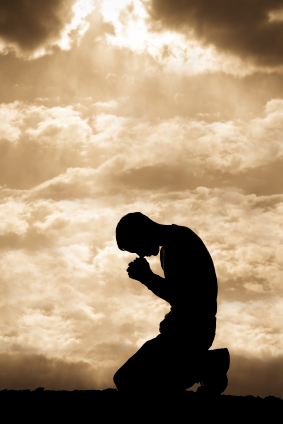
What a week.  So much violence, sadness, and turmoil.  Escaped murderers and cop killers.  Rape and murder of a 16 year-old innocent.  And the unthinkable tragedy of the brutal, senseless killing of nine souls praying in a house of worship. The world has a gaping wound and oozing out is hurt and pain.

Whenever there is a tragedy, the media highlights the name and handiwork of the evil doer a million times.  The victims are often the secondary story.  There are even times that stories are slanted to suggest victims of violent, unspeakable crimes are not innocent and blameless.  Let’s not demonize victims.  It disrespects their memory, diminishes the agony families are facing, and presents an excuse or defense for the perpetrator of the crime.

I cannot fathom what goes through a person’s mind when they are planning murder.  Where is the sense of conscience?  Where is the respect for life?  Where is the deference to that which is holy and sacred?  And how is it that once again we are at a point in history where the issues of race are sparking such venom and hatred to lead one to murder nine people in cold blood?  Where does that come from?  How does an innocent child brought into this world grow up to hate a group of people so much because of the color of their skin that he wants to annihilate them?  There is an indoctrination which most certainly began in the home.  These thoughts, feelings, and actions were encouraged.  And sadly since symbols of hate fly on flag posts outside state government buildings, then there is an unspoken acceptance of these ideals.

We have to do better.  We’re destroying each other- in the name of race, gender, or political affiliation.  This cannot go on.  Now, more than ever, we need to come together.  In honor of the nine brave people that lost their lives on Wednesday, June 17, 2015 as they sat in their church for bible study, we have to root out this hate.  And let’s not forget their names and the good they did while here on Earth doing God’s work.

The Emanuel 9

  1. The Honorable Rev. Clementa Pinckney, 41 years old
  2. Ms. Cynthia Hurd, 54 years old
  3. Ms. Susie Jackson, 87 years old
  4. Ms. Ethel Lance, 70 years old
  5. Rev. DePayne Middleton-Doctor, 49 years old
  6. Mr. Tywanza Sanders, 26 years old
  7. Rev. Daniel Simmons, Sr., 74 years old
  8. Rev. Sharonda Singleton, 45 years old
  9. Ms. Myra Thompson, 59 years old

We cannot go on like this.  Be kind to one another.  Love.  Love one another.  Love. Love one another whether black or white, male or female.  Just love.

God bless the souls of the Emanuel 9, Emanuel AME Church, Charleston, SC.

Be safe,

L.J.
Follow me on Twitter: @CrimeDoc1213

#Emanuel9 #IAmAME #Charleston #humanity #peace #love #blessings #prayer #black #white #justice #fairness #crime #violence #BlackLivesMatter #respect

Image Source: celebrationoffamily.com

Police Brutality in the United States: The Past is Prologue

Past is Prologue Image                                            (What is Past is Prologue, Archives) McKinney Police Incident

In 1951, a Florida Sheriff shot two black men he was transporting in his police vehicle. The two men had been wrongly convicted of a crime. The victims, Samuel Shepherd and Walter Irvin were spared the death penalty after the US Supreme Court overturned their convictions (Equal Justice Initiative, 2014).  The Sheriff shot them shortly after the Supreme Court’s decision was made. The past is prologue.

In 1963, 700 black teenagers were arrested by the Birmingham Police Department in the State of Alabama. The police clubbed them with their Billy sticks, turned fire hoses on them, and attacked them with their police canines (Equal Justice Initiative, 2014). Their crime? Protesting racial segregation in the South. The past is prologue.

In 1979, the Los Angeles Police Department (LAPD) shot and killed Ms. Eula Love in her front yard.  Ms. Love was shot eight times by two LAPD officers who were called to the scene by the gas company seeking assistance in shutting off her service (La Ganga & Susman, 2014).  The past is prologue.

In 1980, white officers tied bags over the heads of some black males they were interrogating in the shooting death of a New Orleans police officer.  This came after four blacks were shot and killed by police in response to the slain officer’s death. The interrogation tactics violated police policy, federal law, and basic human rights.  Their actions led to a 1981 indictment (NY Times). The past is prologue.

In 1991, Rodney King was savagely beaten by 20 LAPD officers after a car chase.  Rodney King sustained 11 fractures after officers struck him over and over with their police batons and kicked him while he was on the ground.  Mr. King was unarmed.  The incident was caught on tape and sparked world-wide attention. The City of Los Angeles exploded and citizens rioted for five days (CNN Library, 2015). The past is prologue.

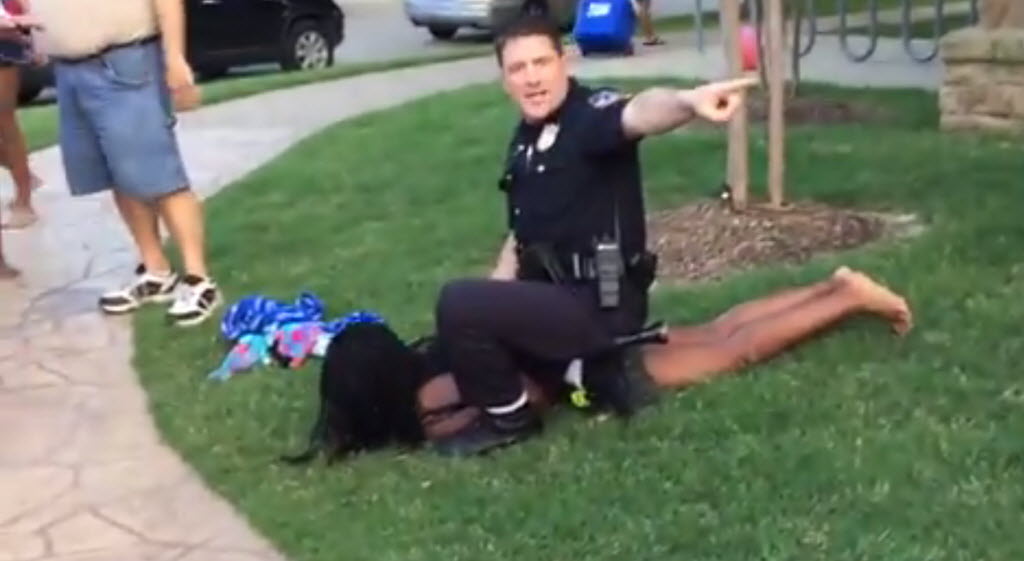
In 2015, a young, black 14 year-old girl wearing a two-piece bikini was forcefully thrown to the ground by an out of control police supervisor in McKinney, TX who was responding to a call about a pool party that had gotten out of control.  The white officer sat on the young girl’s back screaming obscenities at her and bystanders who yelled and cried for him to stop. The past is…wait, this just happened last week.

Police interactions with black citizens continue to be marred by fear, suspicion, and violence.  There is distrust between both groups that is based in history and experience.  But this incident in particular gives great pause as the victim in this case is a young female.  The officer was in full uniform with all his equipment, including his police issued firearm.  Where was the threat?  Sure, the teenagers outnumbered the officers but when you view the video, the kids showed deference and in fact were fearful and sat down and lay down on the ground when told.  This officer arrived on the scene angry.  Therefore, anything that was said to him was filtered through his blue colander.  There were other officers on the scene that were calm and spoke to the teens in a respectful manner but this one rogue officer was out of control.

As a trained Criminologist, if his case came across my desk, I would have recommended some extensive counseling beyond termination.  This officer was clearly out of control.  When he did a barrel roll across the grass and ran down the street, he appeared like a rabid animal.  When he pulled his gun out and pointed it at the group of teens, the incident turned the corner.  He had a clearly snapped. Even other officers on the scene tried to push him back and they should be applauded for that.  This was clearly a rotten apple.  Although this McKinney police officer acted individually, his position affords him such great power that these interactions are devastatingly dangerous.  Sadly, racism, oppression, and discrimination still exist.  They exist in all major systems such as education, health care, and the criminal justice system.  Perhaps this officer just snapped?  I doubt it.  I am certain that if you look back in his record, there was be a telling pattern of problematic behavior.  That being sad, he should never have been allowed to work out his problems on the young citizens of McKinney.  This is never a fun discussion but we need to set aside our feelings of discomfort and begin some real discussions on the issue of race in policing and how some are abusing their power and hurting people and communities in the aftermath.

There was once a time that when a ship was sinking attempts for rescue started with the most vulnerable victims: women and children.  Women and children have always been treated differently and at times, more gently.  For example, female officers are always (or should be) used to pat down females.  There is a societal rule in terms of how men versus women should be handled.  Thus, the outrage in social media after this case is warranted.  Certain behaviors and actions should be off limits and this McKinney officer went too far. Let’s do better.

Be safe,

L.J.
Follow me on Twitter: @CrimeDoc1213

#BlackLivesMatter #protectourgirls #McKinney #poolofoppression #policebrutality #police #accountability #pastispresent #socialjustice #criminaljustice #crime #justice #peace #compassion #dialogue #ljsamuel

References

CNN Library. (2015). Los Angeles riot fast facts. Retrieved from www.cnn.com/2013/09/18/us/los-angeles-riots-fast-facts/.

Equal Justice Initiative. (2014). A history of racial injustice. Retrieved from www.racialinjustice.eji.org.

La Ganga, M. & Susman, T. (2014). Controversial police use-of-force cases. LA Times. Retrieved from http://graphics.latimes.com/towergraphic-controversial-police-cases/

New York Times. (1981, October 10). 7 officers indicted in New Orleans. Retrieved from http://www.nytimes.com/1981/07/10/us/7-officers-indicted-in-new-orleans.html.

Image Sources

National Archives, picture taken by L.J. Samuel
McKinney Incident, dallasmorningviewsblog