In April and May, Sexual Assault Awareness Month is observed in the United States and Canada, respectively. The rates of sexual assault are still staggering. This is a time where we pause to highlight cases of sexual violence directed towards women and girls and amplify voices of survivors. Official statistics show that before the age of 18, 42% of American females will have experienced at least one completed rape. Black women and girls are disproportionately represented among these numbers. According to the National Center on Violence Against Women in the Black Community, “[for] every black woman who reports rape, at least 15 black women do not report.”
The sounding mantra on social media posts this month is #consentrules. But that does not appropriately address the brutality, violence, and trauma black women experience when their bodies are used and abused. It is time to yell NO louder. We have the right to say NO if we do not want or invite sexual advances by predatory men. NO to taking our innocence. NO to violating young girls’ bodies. NO to the hyper sexualization of black women’s bodies. NO to seeing us as less than human. NO to victim blaming. And YES to protecting black women- body, mind, and soul.
Be Safe,
Laurie
*Subscribe to You Have the Right to Remain Informed.
October is Domestic Violence Awareness Month in the Caribbean, the United Kingdom, and the United States. In Canada, it is recognized in November. Domestic Violence Awareness Month is a time where we pause to highlight domestic violence issues in our communities, offer enhanced resources and assistance to victims, and carve out new space for survivors to share their stories on the road to healing. But really, every month should be domestic violence awareness month because women are being abused by intimate partners every day of the year all over the world. In fact, according to the UN (2018), one in three women will experience physical, sexual, and/or psychological violence in her lifetime.
In my work with domestic violence victims at Cupid’s Sting, they have so much going on in their lives with a stress level of 100. They are making decisions about whether to stay with their abusive partner or to leave, taking care of their children and shielding them from the abuse, working, dealing with the police, the courts, and the list goes on. One of the things I always recommend is that they take time for themselves and practice self-care. On September 30, 2020 I had the pleasure of speaking to Ms. Brooke Senior, a DBT Therapist who offered some information on coping skills for domestic violence victims and shed some light into the practice of self-care and mindfulness. Below is a snapshot of our conversation.
Samuel: “What is self-care?”
Senior: “Self-care is just what it sounds like, taking care of yourself, but what does that mean? It is so much more than what the media portrays. It is not just manicures and massages and warm baths, although, those things are nice and have their place! It is about finding time and holding space for your overall physical and mental wellness, as well as your safety. To me, self-care is also community care. Without taking care of ourselves, we cannot take care of others. When we do both, that is a community.”
Samuel: “The part you described about safety really resonates with me based on the work I do in women’s safety. I often tell women that taking care of themselves is vitally important as it is at that point where they are tired and run-down that they are more easily victimized.”
Senior: “Right. And if you don’t take care of you, you cannot take care of anyone else.”
Samuel: “So, self-care and mindfulness are connected right? What is mindfulness and why is it important.”
Senior: “Good question. Mindfulness is the act of consciously focusing the mind on the present moment without judgment or attachment. For example, paying attention to the present moment, ‘What is going on around me? What are my surroundings? What is happening in my body/what physiological sensations am I experiencing right now? What am I feeling?’ Really taking time to recognize what is going on in these moments, not judging them as “good” or “bad” or “right” or “wrong,” etc, while also recognizing that this moment, these things, will pass.” A way to practice this is it to use what I call the “how” and “what” skills, which means to observe, describe, and participate in the present moment and do so nonjudgmentally (try not to use words like “good,” “bad,” “right,” or “wrong,” just the facts), one-mindfully (one thing at a time), and effectively (figure out what works for YOU.. for example, if you know that having a conversation with a person at 9:00 pm is not going to go well then do not do that!).”
Samuel: “Again, this is so important as it relates to domestic violence victims who are often hard on themselves for not getting out sooner or seeing red flags in their relationship. But in order to move on, they need to let go of the judgment and focus on what they can control in the moment. And for me, being in the moment also means they are paying attention to what is going on around them which is an important safety skill. Now, what is DBT and how can the skills assist domestic violence victims?”
Senior: “Dialectical Behavior Therapy (DBT) is a type of cognitive behavioral therapy that focuses on reducing unwanted or “maladaptive behaviors,” and creating new, healthy patterns of behavior by learning coping skills. What I love about this therapy so much is that we ALL need skills! Skills help us every day of our life, and the skills that we learn in DBT focus on building healthy relationships and ending unhealthy relationships (interpersonal effectiveness), living in the moment (mindfulness), handling crisis and/or difficult moments in safe and healthy ways (distress tolerance) and regulating our emotions (emotion regulation). We all can benefit from that. Another important aspect of DBT to highlight is that this therapy also focuses on working to find the synthesis between things that may feel like polar opposites, or things that we do not always realize can exist simultaneously (this is the “dialectic” piece). An example of this is “change and acceptance,” which is the core dialectic in DBT: we can (work to) accept our circumstances, our past, things that are happening or have happened to us, etc, while also working to create lasting and powerful change in our lives. Another powerful dialectic is that we can love someone, AND also recognize that the relationship is unhealthy for us, or does not align with our values and long-term goals. Dialectics can be difficult, and they can help create such powerful balance in our lives. Through learning different skills and working to find acceptance and create change in our lives, we can build what is known in DBT as, “our life worth living.”
—
Ms. Senior provided some practical and useful skills everyone can employ to take care of themselves. Review them and reach out if you have any questions. Carve out some time for yourself. Slow down. Breathe. You are able to make better decisions when you have a clear head and your mind is not full of racing thoughts. I know it is hard but your safety, your life is more important.
Be safe,
L.J.
*Subscribe to You Have the Right to Remain Informed.*
Follow me on Twitter: @CrimeDoc1213
Learn more about Cupid’s Sting Non-Profit at @cupidssting (Facebook), @cupidssting (Instagram), and @Cupids_Sting (Twitter)
It is that time of year again: Carnival! Carnival is in full swing around the world from Antigua to Toronto to London. On Saturday, August 3, 2019 Toronto will host its 52nd annual Caribana festival. Caribana is a huge Caribbean celebration that millions of people from across the globe converge on the city to enjoy. Carnival is a time to let loose, have fun, dance, dance, and dance. It is also a time to be mindful of safety. I have partnered with Cupid’s Sting, a non-profit interpersonal violence reduction program to bring you some tips to ensure a safe and enjoyable time during whatever Carnival celebration you plan to attend.
Carnival Safety Tips
Travel in groups and with people you know.
Know your route (Google is your friend).
Be aware of your surroundings.
Always let someone know where you will be.
Designate a meet-up spot in case you are separated from your friends.
Purchase your own drinks.
Don’t leave drinks unattended.
Use a car service such as Uber or Lyft if you will be drinking.
Carry an extra battery pack for your cell phone.
Wear comfy shoes.
If you are someplace where you do not feel safe or comfortable, leave.
If you are a victim of theft or assault, let the authorities know. Never be embarrassed or scared as you have the right to be safe.
Just some simple safety reminders as you fete. Enjoy the bacchanal!
On Sunday, November 19, 2017 a young woman in Washington, DC was sexually assaulted by a man she thought was an Uber driver. She was out with friends and flagged down a car with an Uber sticker so she could be taken home. It turns out that the driver had been let go from Uber but was still driving around the city giving the impression that he was a full-fledged driver. After the young woman and her friend were picked up, they were driven to the campus of American University where at some point, her friend got out. The driver then circled around the campus and parked in a remote lot and raped the female passenger. He then drove her to her dorm and dropped her off. The female student then reported the incident to campus police who have video footage of the car with the Uber sticker prominently displayed driving around the campus.
No where is safe. Not work, the gym, Capitol Hill, the spa, nor an Uber. Why does this continue to happen? Why do men continue to use the female body for their pleasure with total disregard for how their abusive actions and behavior will scar her.
This past summer, I experienced an unsettling situation with an Uber driver. After being picked up in front of my home he immediately started asking me personal questions and staring at me through the rear view mirror. I knew he was jerk and was trying to come on to me. The driver was so distracted by looking at me in the mirror that he missed the turn to take me to my destination. I told him to pull over as I was terminating the ride and as soon as I was safe, I jumped out of the car. Prior to that however, I shared the driver information with my husband and a girlfriend and texted both about how strange the driver was acting. The harassment is real. It can happen anywhere. But you have to take steps to protect yourself. Always let people know where you are going. If you do not show up at a designated time then at least they can back track your steps with information such as the car, plate, driver, etc. And if you feel uncomfortable in a situation, DO NOT push that feeling away. It means something is not right and you do not have to compromise your safety for anyone. Be aware of your surroundings and be aware of people- known and unknown as unfortunately not everyone is your friend. We are living in a different time. The experiences of harassment, abuse, and misconduct faced by women are not new but now it is out in the open and it will no longer be swept under the rug.
Be safe,
L.J.
Follow me on Twitter: @Cupids_Sting
Follow me on Instagram: @cupidssting
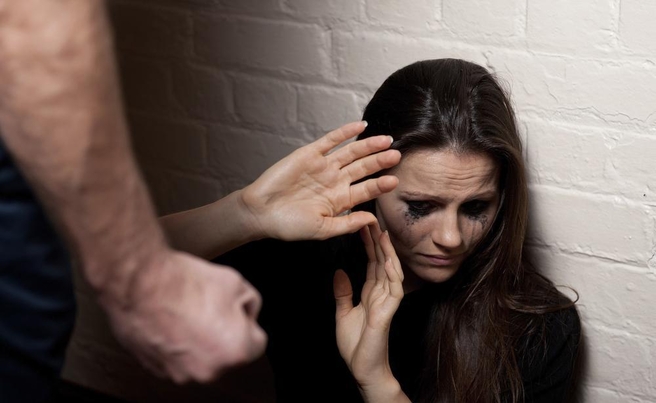
According to the National Coalition Against Domestic Violence (NCADV), approximately 33% of women have been victims of domestic violence. This figure is misleading as it is based on official reports. Many victims do not come forward for fear of greater violence. If the 33% figure does not resonate with you, let me put it this way- your sister, mother, friend, cousin, co-worker, mentor, teacher, or loved one has probably been abused at some point in her life. She has been pushed, punched, slapped, yelled at, demeaned, and threatened by the person she calls ‘partner.’ That’s not true, you say? They would have told you, right? They didn’t even tell the police.
After the smoke cleared, they picked themselves up off the floor and washed the tears off their face, put peroxide on their wounds, left a message for their boss to let them know they would not be at work the next day, then proceeded to make their abuser dinner so that he would not get angry again.
The truth is that this crime is being perpetrated in households all across the United States. Domestic violence does not discriminate. Whether you live in the most expensive house or public housing, violence may very well knock at your door. Rich or poor, black or white, Christian or Muslim, gay or straight, domestic violence knows no bounds. And so the victim puts on her mask and follows her script as society expects her to do.
For those of us on the outside, we think that if we were ever violated by a husband, boyfriend, or partner, we would never stay. I can just hear it now. “Girl, if he ever puts his hands on me, that’s it! I’m walking away!” Easier said than done. Many women do not walk away. One must first understand the psyche of victims to understand why. The reasons are many. Perhaps she does not have the courage to leave due to low self-esteem. Maybe she is a stay at home mom and leaving means a loss of financial support and living in a shelter. Then there are feelings of embarrassment. Leaving means admitting to the outside world that she failed at her relationship and ‘allowed’ her man to hit her. Then there is fear. A large number of abused women are stalked by their partners while they are together and/or after they leave their abuser. But there is constant fear that their abuser will find them and kill them because they had the courage to leave. And lastly, there is love. You loved him enough to stay ‘I do’ or remain in a relationship with him or raise a family together. These are all extremely complex reasons so we cannot easily judge the actions of victims. What we can do is support the victim and offer help. We can increase our awareness of this terrible issue so that we know the signs if a friend or loved one is being victimized.
If a victim is scared to call the police, there are other resources available. The National Domestic Violence Hotline for example, may be reached at 1-800-799-SAFE (7233). The Centers for Disease Control also has many resources. Their website is: www.cdc.gov/violenceprevention.
Be a good friend. Don’t turn your back because you never know when you may need the same.
Barnett, O.W & LaViolette, A.D. (1993). It could happen to anyone: Why battered women stay. Thousand Oaks: Sage Publications.
Centers for Disease Control and Prevention. (2014). Understanding intimate partnerviolence fact sheet. Washington, DC: Centers for Disease Control and Prevention.
Follingstad, D., Runge, M., Ace, April, Buzan, Robert, & Helff, Cindy. (2001). Justifiability, sympathy level, and internal/external locus of the reasons battered women remain in abusive relationships. Violence and Victims, 16 (6), 621-644.
National Coalition Against Domestic Violence. (2014). Domestic violence fact sheet. Colorado: National Coalition Against Domestic Violence.




 You Have the Right to Remain...Informed