Taking Care of Yourself, Even in the Midst of an Abusive Relationship

By: Laurie Samuel, Ph.D.

October is Domestic Violence Awareness Month in the Caribbean, the United Kingdom, and the United States.  In Canada, it is recognized in November.  Domestic Violence Awareness Month is a time where we pause to highlight domestic violence issues in our communities, offer enhanced resources and assistance to victims, and carve out new space for survivors to share their stories on the road to healing.  But really, every month should be domestic violence awareness month because women are being abused by intimate partners every day of the year all over the world.  In fact, according to the UN (2018), one in three women will experience physical, sexual, and/or psychological violence in her lifetime.

In my work with domestic violence victims at Cupid’s Sting, they have so much going on in their lives with a stress level of 100.  They are making decisions about whether to stay with their abusive partner or to leave, taking care of their children and shielding them from the abuse, working, dealing with the police, the courts, and the list goes on.  One of the things I always recommend is that they take time for themselves and practice self-care.  On September 30, 2020 I had the pleasure of speaking to Ms. Brooke Senior, a DBT Therapist who offered some information on coping skills for domestic violence victims and shed some light into the practice of self-care and mindfulness.  Below is a snapshot of our conversation.

Samuel: “What is self-care?”

Senior: “Self-care is just what it sounds like, taking care of yourself, but what does that mean? It is so much more than what the media portrays. It is not just manicures and massages and warm baths, although, those things are nice and have their place! It is about finding time and holding space for your overall physical and mental wellness, as well as your safety. To me, self-care is also community care. Without taking care of ourselves, we cannot take care of others. When we do both, that is a community.”

Samuel: “The part you described about safety really resonates with me based on the work I do in women’s safety.  I often tell women that taking care of themselves is vitally important as it is at that point where they are tired and run-down that they are more easily victimized.”

Senior: “Right. And if you don’t take care of you, you cannot take care of anyone else.”

Samuel: “So, self-care and mindfulness are connected right? What is mindfulness and why is it important.”

Senior: “Good question.  Mindfulness is the act of consciously focusing the mind on the present moment without judgment or attachment. For example, paying attention to the present moment, ‘What is going on around me? What are my surroundings? What is happening in my body/what physiological sensations am I experiencing right now? What am I feeling?’ Really taking time to recognize what is going on in these moments, not judging them as “good” or “bad” or “right” or “wrong,” etc, while also recognizing that this moment, these things, will pass.” A way to practice this is it to use what I call the “how” and “what” skills, which means to observe, describe, and participate in the present moment and do so nonjudgmentally (try not to use words like “good,” “bad,” “right,” or “wrong,” just the facts), one-mindfully (one thing at a time), and effectively (figure out what works for YOU.. for example, if you know that having a conversation with a person at 9:00 pm is not going to go well then do not do that!).”   

Samuel:  “Again, this is so important as it relates to domestic violence victims who are often hard on themselves for not getting out sooner or seeing red flags in their relationship.  But in order to move on, they need to let go of the judgment and focus on what they can control in the moment. And for me, being in the moment also means they are paying attention to what is going on around them which is an important safety skill. Now, what is DBT and how can the skills assist domestic violence victims?”

Senior: “Dialectical Behavior Therapy (DBT) is a type of cognitive behavioral therapy that focuses on reducing unwanted or “maladaptive behaviors,” and creating new, healthy patterns of behavior by learning coping skills. What I love about this therapy so much is that we ALL need skills! Skills help us every day of our life, and the skills that we learn in DBT focus on building healthy relationships and ending unhealthy relationships (interpersonal effectiveness), living in the moment (mindfulness), handling crisis and/or difficult moments in safe and healthy ways (distress tolerance) and regulating our emotions (emotion regulation). We all can benefit from that. Another important aspect of DBT to highlight is that this therapy also focuses on working to find the synthesis between things that may feel like polar opposites, or things that we do not always realize can exist simultaneously (this is the “dialectic” piece).  An example of this is “change and acceptance,” which is the core dialectic in DBT: we can (work to) accept our circumstances, our past, things that are happening or have happened to us, etc, while also working to create lasting and powerful change in our lives. Another powerful dialectic is that we can love someone, AND also recognize that the relationship is unhealthy for us, or does not align with our values and long-term goals. Dialectics can be difficult, and they can help create such powerful balance in our lives. Through learning different skills and working to find acceptance and create change in our lives, we can build what is known in DBT as, “our life worth living.”

Ms. Senior provided some practical and useful skills everyone can employ to take care of themselves.  Review them and reach out if you have any questions.  Carve out some time for yourself.  Slow down.  Breathe.  You are able to make better decisions when you have a clear head and your mind is not full of racing thoughts.  I know it is hard but your safety, your life is more important. 

Be safe,

L.J.

*Subscribe to You Have the Right to Remain Informed.*

Follow me on Twitter: @CrimeDoc1213

Learn more about Cupid’s Sting Non-Profit at @cupidssting (Facebook), @cupidssting (Instagram), and @Cupids_Sting (Twitter)

#lauriesamuel #crimedoc #criminologist #domesticviolence #DVAM #cupidssting #nonprofit #crimedoc #safetyexpert #safetyadvisor #selfcare #mindfulness #DBT #violenceagainstwomen #femalebodiesmatter #Blackwomenmattertoo

Valentine’s Day: Love Not Pain

Valentine’s Day is just around the corner.  Dinner reservations have been made and the night will bring flowers, candy, and cards.  For some women however, the dinner will be thrown to the floor in anger, cards will be ripped to pieces, and nothing sweet will pass their lips.  For them, the night means walking on egg shells in fear and fists driven into her chest and back.  For some, the one they love, the one they call husband, boyfriend, or partner is the one who inflicts the most pain.  Pain borne out of insecurity.  Pain borne out of misplaced blame.  Pain borne out of pure evil.  Love is not supposed to hurt.  But the chances are you know a woman that is in an abusive relationship and the beatings have become her norm.

Here are the facts:

  • Every 17 minutes, a woman in Canada is sexually assaulted;
  • 1 in 3 women will experience physical, sexual, and/or psychological violence in her lifetime;
  • College age women are three times more likely to experience sexual violence than any other age group; and
  • Domestic violence homicide is one of the leading causes of death among black women 15-35 years of age.

Love is not supposed to hurt.  Love is not supposed to hit.  Love is not supposed to kill.  This is not love.  Sadly, victims often suffer in silence.  They do not tell because they truly love their partners.  They do not tell because they are embarrassed.  They do not tell because leaving may mean loss of financial support.  And they do not tell because they do not want to hand over the person they love to the police.

Using the body of a woman as a punching bag to work out one’s anger is wrong, monstrous, and criminal.  Increasing awareness, knowing the signs of abuse, and providing safe spaces to victims is key.  These statistics no longer need to be our reality.  Our young girls and women deserve more and need our help.  Let’s end this now.  Change the norm.  Know the signs.  Acknowledge the behavior.  Condemn abusers and help the victims.

Be safe,

L.J.

Follow me!
Facebook: @cupidssting
Instagram: @cupidssting
Twitter: @Cupids_Sting

#lauriesamuel #crimedoc #valentinesday #2020 #love #notpain #domesticviolence #violenceagainstwomen #genderbasedviolence #awareness #prevention #reduction #cupidssting #nonprofit #resources #safety #DC #Toronto #GTA #Brampton #PeelRegion #Antigua #Caribbean #womensissues #globalissues

Dr. L.J. Samuel is an Author and Criminologist working in Washington, DC, Toronto, ON, and St. John’s, Antigua.  She is the founder of the non-profit Cupid’s Sting where she teaches women live-saving skills to reduce their potential victimization.  She may be reached at info@cupidssting.org.

Assaulted Women’s Helpline 1-866-863-0511

The National Domestic Violence Hotline may be reached at 1-800-799-SAFE (7233).

References

Jones, F.  (2014).  Why black women struggle more with domestic violence.  Time.  Retrieved from http://time.com/3313343/ray-rice-black-women-domestic-violence/.

National Coalition Against Domestic Violence.  (2014).  Domestic violence fact sheet.
Colorado: National Coalition Against Domestic Violence.

Photo by: Sydney Sims, Unsplash.com

Real Talk on Domestic Violence

image

Chances are you know someone that has been abused. Chances are you have seen a couple argue in public.  Chances are someone has put their hands on you, shoved you, or spoken to you in a loud, harsh, demeaning manner that could only be described as verbal abuse.  However you define it, it is all abuse.  And we need to do something about it. Females are being victimized younger and younger as they enter the dating world earlier, some as early as middle school.  We do not need anymore violence against women and we do not need any more killings at the hands of an intimate partner.

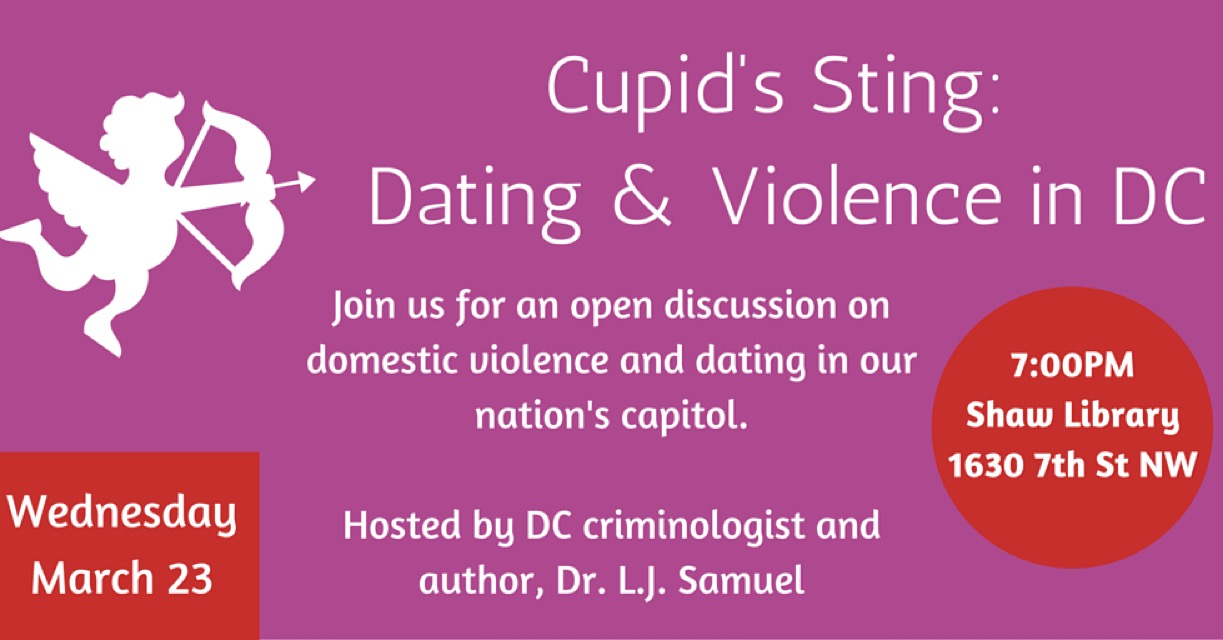
On Wednesday, March 23, 2016, there will be a discussion on this very issue at Shaw Library in Washington, DC.  This is a free community event so come out and lend your ear and contribute on ways to combat this crime and social disease.  Bring a friend or bring a young lady new to dating or bring an older woman who is more seasoned.  We need you all there!

There will be a social hour with refreshments and an opportunity to network with other women.  Please RSVP at bit.ly/1QDK4eC

Be safe,

L.J.

Follow me on Twitter: @CrimeDoc1213

#domestic violence #dating #violence #onlinedating #singles #singlewomen #singlepeople #DC #DMV #DCdatingscene #WomensHistoryMonth #crime #justice #solutions #dontblamethevictim #ljsamuel #deardiary


Work Out Like Your Life Depends on It

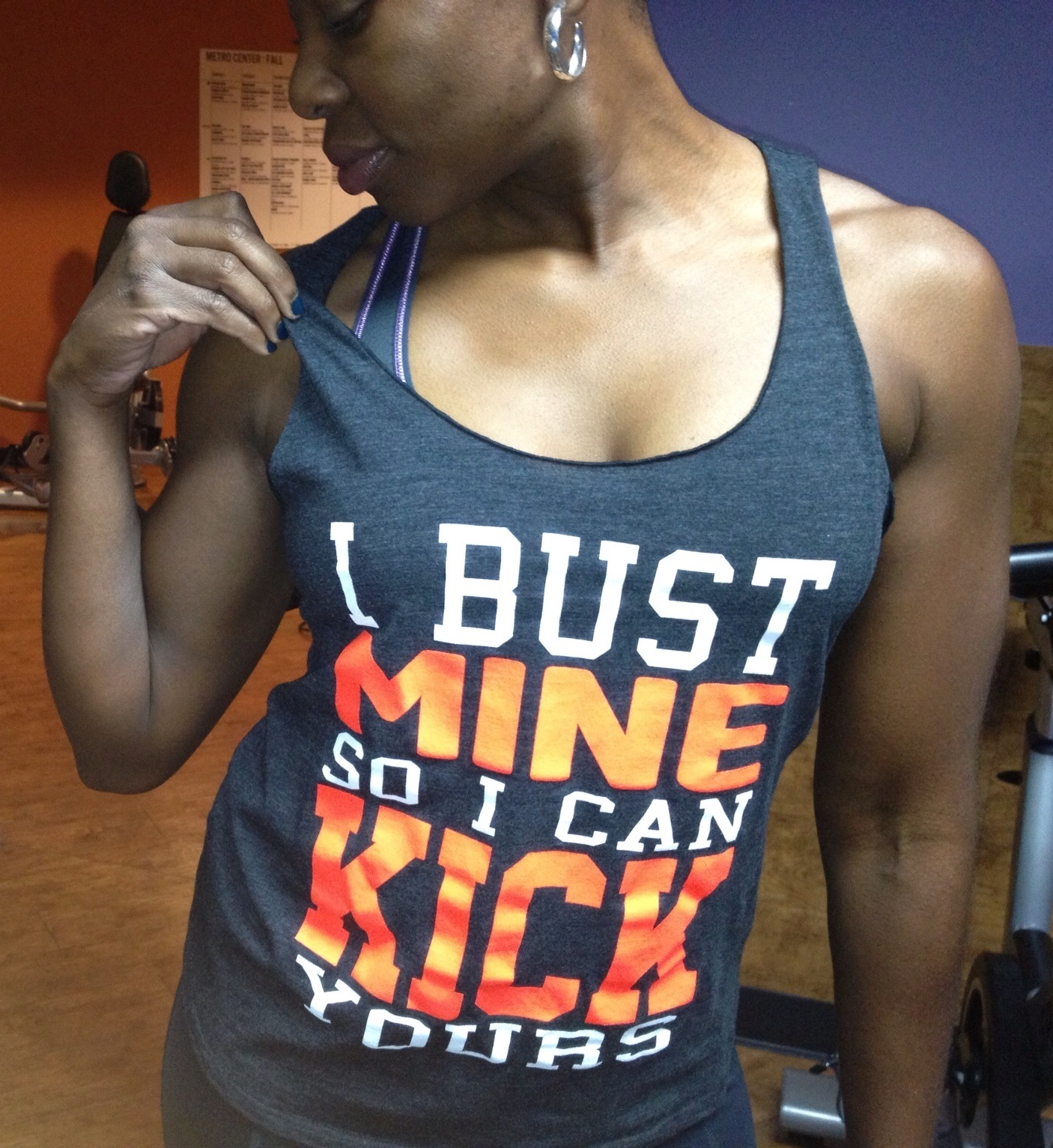
In the continuing theme in looking at ways to reduce our overall personal victimization, today’s post looks at the interaction between exercise and self-defense. There is some research that suggests that females who play sports are less likely to be victims of crime (Harder, 2007; Taylor et al, 2012). Those women that were victimized as a child (ex. physical or sexual abuse) are more likely to enroll in self-defense classes (Brecklin, 2004). Furthermore, females that exercise more frequently tend to have higher self-esteem, are more assertive, and are more self-confident (Harder, 2007). A study of female students from a western university found that those that played on a varsity sports team were “three times less likely to report victimization than non-varsity athletes” (Harder, 2007).

As I highlighted in the Personal Safety Tips in my December 16, 2014 blog post, there are practices we can all engage in to reduce our chances of becoming victims. Self-defense classes teach women (and men) techniques to protect themselves against violence or some other harm or injury. Reputable classes are taught by a law enforcement and/or martial arts expert. After taking a self-defense class, one must not be reckless. I am in no way suggesting that a woman can beat up a male attacker after taking a class, so please do not get over-confident!  These classes do however give you more awareness of your environment and different situations you may be placed in when you are alone. The key is to be alert, know your surroundings, and to recognize warning signs to avoid danger.

So, the next time you hit the gym, work out like your life depends on it.

Be safe,

L.J.
Follow me on Twitter: @CrimeDoc1213
#selfdefense #workout #crime #victim #violenceagainstwomen #ljsamuel #deardiary

Note: Stay tuned for details on Self-Defense Workshop tentatively scheduled for the end of January 2015.

Workout

                                                                Works Cited

Brecklin, L. (2004). Self-defense/Assertiveness training, women’s victimization history, and psychological characteristics. Violence Against Women, 10 (5), 479-497.

Harder, N.R. (2007). The roles of exercise habits, gender stereotype of exercise, and self-esteem in sexual victimization (Doctoral dissertation). Retrieved from ProQuest. (3380304).

Taylor, M., Matthew, J., Wamser, R., Welch, D., & Nanney, J. (2012). Multidimensional self-esteem as a mediator of the relationship between sports participation and victimization: A study of African American girls. Violence and Victims, 27 (3), 434-452.