Where do we go from here?

image

(Source: Lorena O’Neal, http://www.esquire.com)

I am a black woman. I love my black men. But that does not mean I hate white men or Asian women, or Latino men. Another label I wear is criminologist. I study crime, I work with the police, I seek justice when there is wrongdoing. So I am grappling with how to articulate my feelings over the events of the past two days. Numb? So much sadness. Over what? Hate. At first I thought that race was the underlying factor but I’m not so sure anymore. We have gotten to a point where we no longer respect human life no matter the outer shell. One act does not condone another. Are we not better than that? We have to be. Or is this the beginning of our own self aniliation?

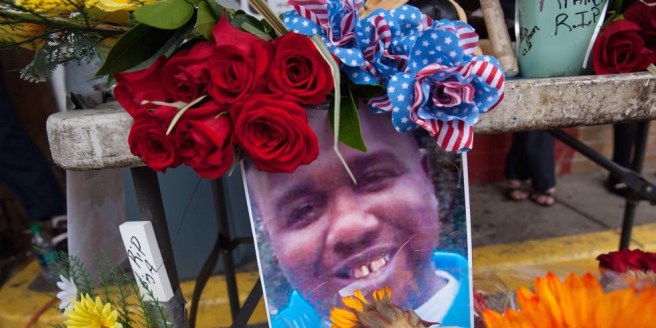
I know some are going to argue that this is history repeating itself but the Lord says “vengeance is mine.” Therefore, it is not ours. To cheer the murder or five Dallas police officers who were simply doing their job is shameless. Not one of them was responsible for taking the life of Alton Sterling or Philando Castile.  I get it. There is a feeling of helplessness but how can this be a solution? A violent response will only increase the violence directed at the very group you mourn for. This is not the way. We are all hurting. Deeply. A generational hurt. But black people are a resilient people so we must figure out a way (yes we have been here before) to heal and figure out a solution that goes beyond DOJ canned responses that breaks through the blue barrier where a respect and appreciation for all life is the starting point of where the police operate from. If not, there will be more death, more violence, more hate, more crying, more arguing, and no change.  And we will continue on this hamster wheel of violence, death, and destruction.

Be safe,

L.J.

Follow me on Twitter: @CrimeDoc1213

#police #policeviolence #policeshootings #blackmen #AltonSterling #PhilandoCastile #Louisiana #Minnesota #policeaccountabilty #policereform #peace #protest #DallasPolice #peacefulprotest #blacklivesmatter #bluelivesmatter #alllivesmatter #hope #change #love

New Year, New Things

Red black coming soon

Greetings All and Happy New Year! It is January 22nd, I can still say that, right?  This is my first post for 2016.  A new year brings a fresh beginning, blossoming of new ideas, the setting of goals, and an opportunity to hit the ‘reset’ button.  I pray this year brings you all that you hope and dream for.

I want to give everyone a sneak peak of my new project for 2016.  Another book! It is the second in the Samantha Harris Crime Series.  Book two is called Going Rogue.  I thank you all for the support of my first book Dear Diary and pray you will continue to support me as my new baby is rolled out.

Going Rogue

Sam is back and tough as ever!

Samantha Harris is back on the job at the DC Police Department after taking some personal time off after her abusive husband was killed by her partner. Just as she is settling in to resume her old duties, the Chief of Police transfers her to Internal Affairs. Friends and colleagues turn on her, leaving Samantha isolated within her own Department. As she is fighting to get her job back at the helm of Homicide, all hell breaks loose and Samantha is thrust into an investigation of a DC Officer gone rogue. Can she maintain her credibility and prove she is still strong enough to handle the job?

Stay tuned for details!

Be safe,

L.J. Follow me on twitter: @CrimeDoc1213

#HappyNewYear #2016 #GoingRogue #DearDiary #LJSamuel #amwriting #amediting #crimefiction #sequel #Amazon #Kindle #crime #justice #police #DCPolice #DC #DMV

What to do when stopped by the police

www.haltonpolice.ca
http://www.haltonpolice.ca

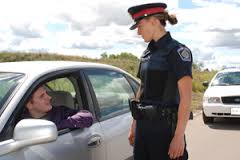
With the highly publicized incidents of police shootings over the past couple of years, many people have questions about exactly they must act when they encounter the police.  There are basic rights everyone has, however it must be recognized that each interaction may unfold differently.

The general rule of thumb is to keep calm and obey the directions of the police. Bad feelings and issues may be sorted out later but you cannot take back a life if an interaction with the police escalates to the point of deadly force.

Common questions:

Q1: Can a police officer stop me if I’m walking down the street?

A1: It is within your right to refuse to speak to or stop for the police. However, if an officer believes that you are behaving suspiciously, they have the authority to detain you for the purposes of an investigation.

Q2: If I am stopped by the police, do they have to read me my rights before I answer any questions?

A2: No.  If you are being placed under arrest, the police are required to read you your Miranda Rights.  They are not required to read you your rights during traffic stops or encounters on the street.

Q3: Do the police have the right to search me?

A3: It depends on the circumstances.  If the police reasonably believe that you may have been involved in a crime, this gives them probable cause to legally search you.  If a police officer asks permission to search you or your property (ex. a vehicle) and you give permission, then that is considered voluntary consent to search.  The police may also search you or your property if they have a warrant.

Q4: May I record a police encounter?

A4: This varies by jurisdiction. In the District of Columbia, it is legal to record police officers carrying out their duties in public as long as it does not interfere with official police business.

Q5: If a police officer orders me to get out of my vehicle, do I have to comply?

A5: Yes.  The police have the right to ask you and any passengers to get out of your vehicle. If you believe they violated your rights, remain calm during the interaction and follow-up later at the closest police station and file a formal complaint with a police supervisor.

Be safe,

L.J.
Follow me on Twitter: @CrimeDoc1213

References

Flyouth.  (2005).  SE youth and the police [Pamphlet]. Washington, DC: Facilitating Leadership in Youth.

Grisham, L. & Hargro, T.  (2015, July 24).  Your rights during police encounters. USA Today. Retrieved from http://www.usatoday.com/story/news/nation-now/2015/07/22/rights-during-police-encounters/30539255

I’m in Love with a Black Man

Hands United

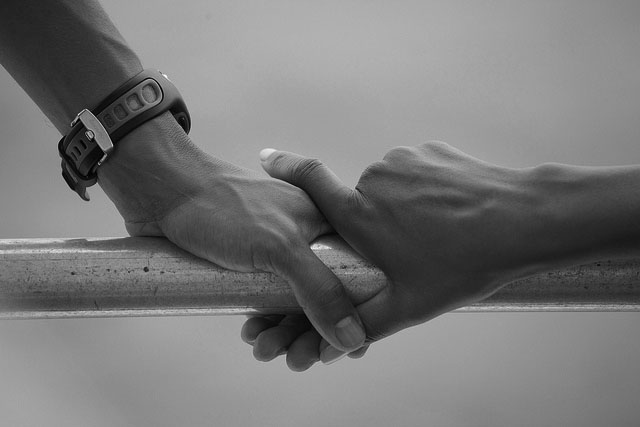
I’m in love with a black man and he loves me.  What affects him, affects me and what affects me, affects him.  So here I am at the annual American Society of Criminology (ASC) meeting presenting the findings of my study on racial profiling in America.  Why is there this constant debate over what it is?  How do you define it?  Quantitatively?  Qualitatively?  Both?  What data is the standard?  The police don’t want to collect race statistics because they don’t want to be called racists. And the community complains to news reporters and their stories are called ‘anecdotes.’  So how do you tame this beast?

I stand in front of the brightest minds in my field, the country’s top scholars waiting to hear what I found.  So with a big breath, I start…

How can scores of black people be wrong?  Why are they discounted so?  If the tables were reversed and black cops were stopping white citizens, surely there would be no debate.  Listen to me carefully.  I documented the lives and stories of 20 black men living in Washington, DC for six months.  They kept a journal of the times they had been stopped and the average was five times a week.  Let me say that again, the average was five times a week.  Some will say that I have limitations in my research and that my case study was not scientific enough.  Do I know they weren’t speeding?  I guess not.  Were they transporting drugs?  I hope not. Drugs were never found in any of the so-called ‘consent searches.’

My conclusion is that the black man is under siege.  He followed doctor’s orders and got a good education from a good school, got a good job, and bought a nice house in the ‘right’ neighborhood.  He doesn’t beat his wife, is a good father to his children, but to no avail.  He is still oppressed, disrespected, and harassed.  I guess someone forgot to tell him: You’re still black.

Be safe,

L.J.
Follow me on Twitter: @CrimeDoc1213@gmail.com

#love #black #man #race #police #racialprofiling #RaceinAmerica #racematters #dialogue #discourse #truth #respect #change #ASC #criminology #crime #justice #deardiary #ljsamuel

Image source: http://www.handsunited.org

Police Brutality in the United States: The Past is Prologue

Past is Prologue Image                                            (What is Past is Prologue, Archives) McKinney Police Incident

In 1951, a Florida Sheriff shot two black men he was transporting in his police vehicle. The two men had been wrongly convicted of a crime. The victims, Samuel Shepherd and Walter Irvin were spared the death penalty after the US Supreme Court overturned their convictions (Equal Justice Initiative, 2014).  The Sheriff shot them shortly after the Supreme Court’s decision was made. The past is prologue.

In 1963, 700 black teenagers were arrested by the Birmingham Police Department in the State of Alabama. The police clubbed them with their Billy sticks, turned fire hoses on them, and attacked them with their police canines (Equal Justice Initiative, 2014). Their crime? Protesting racial segregation in the South. The past is prologue.

In 1979, the Los Angeles Police Department (LAPD) shot and killed Ms. Eula Love in her front yard.  Ms. Love was shot eight times by two LAPD officers who were called to the scene by the gas company seeking assistance in shutting off her service (La Ganga & Susman, 2014).  The past is prologue.

In 1980, white officers tied bags over the heads of some black males they were interrogating in the shooting death of a New Orleans police officer.  This came after four blacks were shot and killed by police in response to the slain officer’s death. The interrogation tactics violated police policy, federal law, and basic human rights.  Their actions led to a 1981 indictment (NY Times). The past is prologue.

In 1991, Rodney King was savagely beaten by 20 LAPD officers after a car chase.  Rodney King sustained 11 fractures after officers struck him over and over with their police batons and kicked him while he was on the ground.  Mr. King was unarmed.  The incident was caught on tape and sparked world-wide attention. The City of Los Angeles exploded and citizens rioted for five days (CNN Library, 2015). The past is prologue.

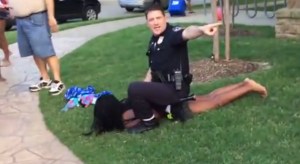
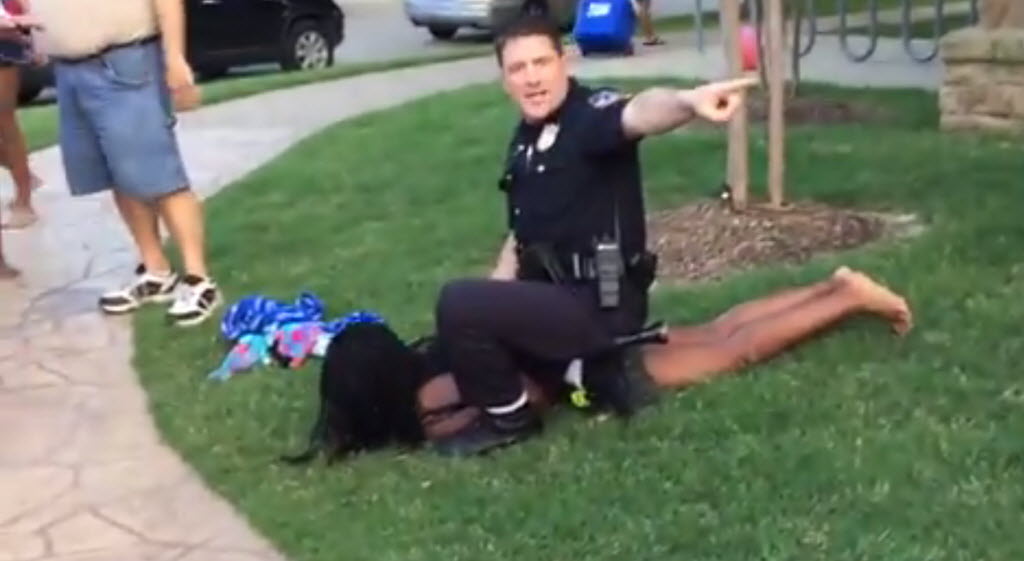
In 2015, a young, black 14 year-old girl wearing a two-piece bikini was forcefully thrown to the ground by an out of control police supervisor in McKinney, TX who was responding to a call about a pool party that had gotten out of control.  The white officer sat on the young girl’s back screaming obscenities at her and bystanders who yelled and cried for him to stop. The past is…wait, this just happened last week.

Police interactions with black citizens continue to be marred by fear, suspicion, and violence.  There is distrust between both groups that is based in history and experience.  But this incident in particular gives great pause as the victim in this case is a young female.  The officer was in full uniform with all his equipment, including his police issued firearm.  Where was the threat?  Sure, the teenagers outnumbered the officers but when you view the video, the kids showed deference and in fact were fearful and sat down and lay down on the ground when told.  This officer arrived on the scene angry.  Therefore, anything that was said to him was filtered through his blue colander.  There were other officers on the scene that were calm and spoke to the teens in a respectful manner but this one rogue officer was out of control.

As a trained Criminologist, if his case came across my desk, I would have recommended some extensive counseling beyond termination.  This officer was clearly out of control.  When he did a barrel roll across the grass and ran down the street, he appeared like a rabid animal.  When he pulled his gun out and pointed it at the group of teens, the incident turned the corner.  He had a clearly snapped. Even other officers on the scene tried to push him back and they should be applauded for that.  This was clearly a rotten apple.  Although this McKinney police officer acted individually, his position affords him such great power that these interactions are devastatingly dangerous.  Sadly, racism, oppression, and discrimination still exist.  They exist in all major systems such as education, health care, and the criminal justice system.  Perhaps this officer just snapped?  I doubt it.  I am certain that if you look back in his record, there was be a telling pattern of problematic behavior.  That being sad, he should never have been allowed to work out his problems on the young citizens of McKinney.  This is never a fun discussion but we need to set aside our feelings of discomfort and begin some real discussions on the issue of race in policing and how some are abusing their power and hurting people and communities in the aftermath.

There was once a time that when a ship was sinking attempts for rescue started with the most vulnerable victims: women and children.  Women and children have always been treated differently and at times, more gently.  For example, female officers are always (or should be) used to pat down females.  There is a societal rule in terms of how men versus women should be handled.  Thus, the outrage in social media after this case is warranted.  Certain behaviors and actions should be off limits and this McKinney officer went too far. Let’s do better.

Be safe,

L.J.
Follow me on Twitter: @CrimeDoc1213

#BlackLivesMatter #protectourgirls #McKinney #poolofoppression #policebrutality #police #accountability #pastispresent #socialjustice #criminaljustice #crime #justice #peace #compassion #dialogue #ljsamuel

References

CNN Library. (2015). Los Angeles riot fast facts. Retrieved from www.cnn.com/2013/09/18/us/los-angeles-riots-fast-facts/.

Equal Justice Initiative. (2014). A history of racial injustice. Retrieved from www.racialinjustice.eji.org.

La Ganga, M. & Susman, T. (2014). Controversial police use-of-force cases. LA Times. Retrieved from http://graphics.latimes.com/towergraphic-controversial-police-cases/

New York Times. (1981, October 10). 7 officers indicted in New Orleans. Retrieved from http://www.nytimes.com/1981/07/10/us/7-officers-indicted-in-new-orleans.html.

Image Sources

National Archives, picture taken by L.J. Samuel
McKinney Incident, dallasmorningviewsblog